Planting a garden could show belief in the future, as Audrey Hepburn once said. It can also be a means to an end for artist and gardener.
Says Elizabeth Murray, whose work is inspired by Claude Monet: “A successful garden is the highest form of art, utilizing all the senses, while orchestrating plants in various color combinations, shape, height and texture in a design to convey a mood or feeling. The plants are chosen to grow and bloom together harmoniously. Claude Monet was a master gardener, horticulturist and colorist.”
Murray spent three months at the Monet Garden in Giverny, France, working in the garden and recording the hundreds of plants that were carefully orchestrated to put on a floral show throughout the seasons. She has given us detailed landscape drawings in her book, “Monet’s Passion.”
This is a book I still use today in my horticultural research, and have been inspired to share with all innovative gardeners.
When sketching out your spring garden, take some advice from an expert. Murray says, “Look at the light going through the trees! Then you ask yourself, with this inspiration, what am I going to do with it?”
Follow the rules of color theory
If you look at a color wheel, complementary colors are those that appear opposite each other on the wheel. When placed together they are powerful combinations that give a dazzling effect.
Blue/purple with yellow/orange — This combination can be seen often in the Monet Garden and his paintings, and you can use it in your garden as well:
- Trailing orange nasturtium gliding through a bed of indigo lobelia
- Yellow calendula poking up their heads through violet salvia
- Towering helianthus with a border of purple pansies
- Purple iris with yellow rudbeckia
- Elegant Pacific giant delphinium with a border of miniature dahlias
Listen to the experts
One of my favorite garden writers from Garrison, New York, is Katherine Whiteside. She has been writing books about gardens for over 20 years, and her advice for creating an “evening area,” is to use a Victorian garden dictum called “white for night.”
Choose brilliant white flowers for a special seating area in your yard, sip on a cool drink and relax!
Bright white annuals
- Nicotiana — A relative of tobacco, but smells like heaven
- Moonflowers — This trailing morning glory has brilliant white, trumpet-like flowers and will stand tall on a trellis
- White petunias — When rubbed gently they give off a sweet smell
- Four O’clocks — Yes, they open at 4 p.m. and close in the morning!
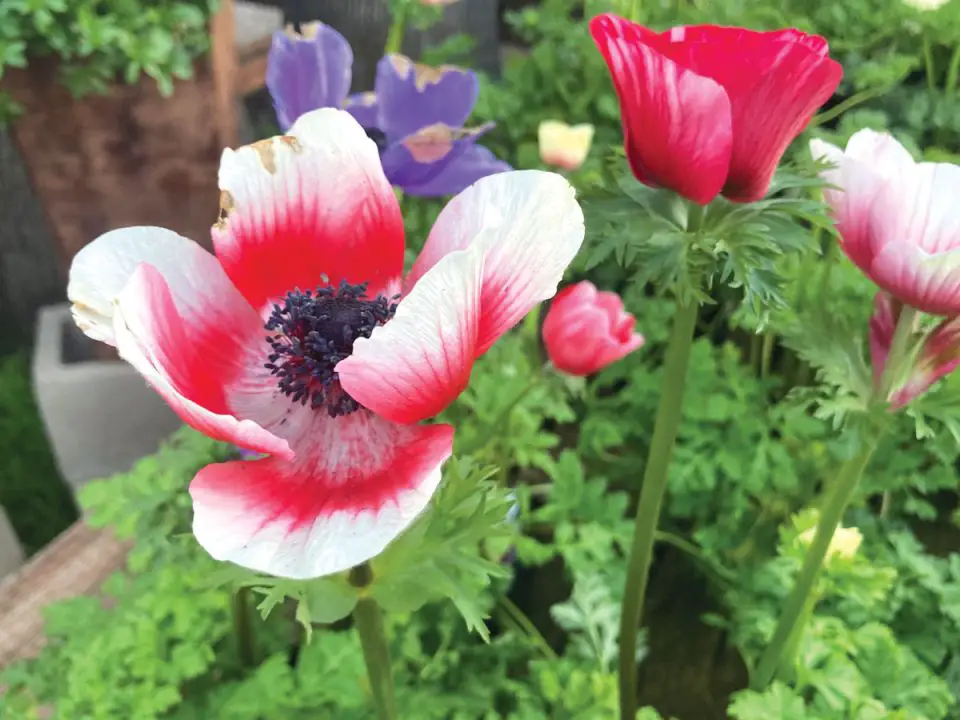
- Anemones — This tiny corn brings forth a brilliant white flower with a black central disk and will return next year
According to Whiteside: “Visit your local nursery as late in the day as possible. Many stars of the night actually look very unappealing during the brightness of the day. For example, during the daytime white Nicotiana looks like discarded tissue. But come sunset, these daytime droopers perk up into starry flowers that toss a perfumed scent.”
Her book, “The Way We Garden Now,” is still available and presents 40 garden plans, including vegetables, flowers, patios and garden design.
Get out and experiment
I strongly suggest going to your local library to research garden writers and their landscape designs. I am very fond of the coffee table-size books that illustrate the English gardens of Gertrude Jekyll and Vita Sackville-West.
My bookshelf is overflowing with my favorites, but even second-hand bookstores and library bookstores will bring ideas and inspiration. And visit your favorite nurseries and garden centers for a tour of the latest spring flowers.
Jano Nightingale is a horticulturist and Master Gardener who teaches vegetable gardening at the Carlsbad Senior Center community garden. For more information about her upcoming classes, contact her at [email protected] or call the Carlsbad Senior Center at 442-339-2650 to register.