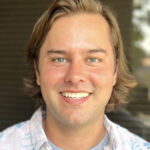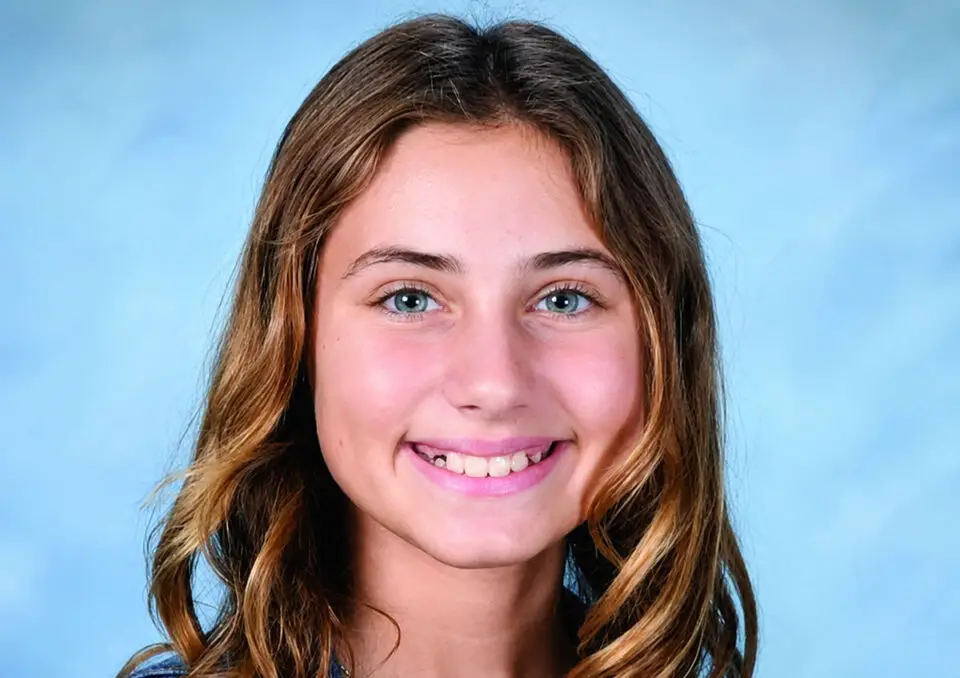
VISTA — A judge set a trial date for a man accused of vehicular manslaughter after denying the defendant’s request for a diversion program that would have dismissed the charges upon successful completion of court-ordered conditions.
Eddie Sengendo, 45, was charged in November 2025 with misdemeanor vehicular manslaughter in the death of Emery Chalekian, 12, following an April 2025 collision.
The diversion hearing was originally scheduled for July 16 but was delayed after Judge Sim von Kalinowski recused himself because of a conflict. The case was reassigned to Judge Robert Kearney, who heard arguments from both sides before denying the request this week.
The trial was scheduled for Sept. 14 at the Vista Courthouse, with an Aug. 13 readiness hearing.
Just before 7 p.m. on April 25, 2025, Emery, a sixth grader at Park Dale Lane Elementary School, was crossing Encinitas Boulevard with a friend after ballet class when she was fatally struck by a Nissan Xterra that ran a red light, according to descriptions of the incident discussed in court July 31.
On Friday, Jay Temple, Sengendo’s defense attorney, argued before the judge that the facts of the case warranted judicial diversion because of their similarity to another San Diego County case, Bobo v. Appellate Division of Superior Court.
In Bobo, the California Court of Appeal ruled that judges cannot deny misdemeanor diversion based solely on the facts of the alleged offense. Instead, courts must determine whether diversion serves the goals of rehabilitation and justice.
According to Temple, Sengendo has worked hard to build his life and is supported by many in the community, as evidenced by letters submitted to the court on his behalf.
“(Sengendo’s) come from Uganda as a refugee to this country,” Temple said. “He started here in a homeless shelter. He’s lived his life – worked his way up – out of homelessness to a position where now he gives back to the community.”
Temple added that Sengendo “is the type of person who will take responsibility,” citing his charitable work and standing in the community.
But Kearney said the evidence presented to the court painted a different picture. He found Sengendo’s actions surrounding the collision and unresolved factual disputes incompatible with diversion, instead setting the case for trial.
“I think when I look at whether or not we can treat, restore and rehabilitate your client, we don’t even know what we’re trying to fix,” Kearney said. “We don’t know what caused his behavior afterwards. I find that there is no suitable way to address those issues other than having incarceration or the threat thereof.”
Courtroom discussion
Sengendo spoke in court Friday for the first time during the legal proceedings, describing a roughly hourlong conversation with John and Bridget Chalekian and apologizing directly to Emery’s parents.
“They’re a wonderful family and I’m very, very sorry this happened,” Sengendo said. “For the rest of our lives we all have to live with this and I’m sorry.”
Temple said Sengendo “was in shock” following the collision and “did what most people would do,” adding that Sengendo had been blinded by the glare of the setting sun, preventing him from seeing the traffic signal turn red.
Kearney seemed unconvinced, noting court records indicate the light had been red for more than six seconds.
“That’s a long time,” he said.
The judge added that because the Xterra struck another vehicle stopped at the light before entering the intersection, other drivers had been able to see the signal despite the glare.
Kearney also questioned why a driver would “barrel forward” if uncertain about roadway conditions because of limited visibility.
Temple also defended Sengendo’s actions immediately after the collision, arguing that after the Xterra came to rest and Sengendo exited the vehicle, bystanders had already called 911 and were assisting Emery and the friend who had been walking with her.
According to Temple, one of Sengendo’s first calls was to a lawyer, but said it was “for moral support” because the attorney was also a friend, and that Sengendo had been cooperative with law enforcement throughout the investigation.
Kearney said surveillance footage showed the vehicle’s brake lights briefly engaged before it struck a car stopped at the red light. After that, he said, the brake lights did not illuminate again while the vehicle dragged Emery’s body underneath it.
The judge added that an adult at the scene “made the right choice” by attending to a child witness who was in shock rather than Emery immediately after the collision.
However, Kearney pointed out that Sengendo did not check on the two children or the driver of the other vehicle he struck.
“He didn’t check on any of those people and he did not call 911,” Kearney said, “which I think shows a level of callousness and lack of empathy that actually surprises this court.”
The judge said his decision to deny diversion and proceed to trial was based on his interpretation of the “clear meaning of what the legislature was intending.”
Kearney said the “difficult facts for the defendant” shaped his decision and that, despite reading the “heart wrenching letters” submitted by the Chalekian family and their friends, he could not consider them because of how the law is written.
“I don’t think your client’s suitable [for a diversion program], and it’s based on the level of behavior that occurred afterward and during,” Kearney said. “Never even hitting the brakes when he’s running over this poor child, never checking on the other driver he hit, never checking on anybody.
“Giving the police good information, calling his attorney, all of that indicates a person who is not willing to accept responsibility.”
Family responds
The Chalekian family prepared remarks for the court but did not deliver them after Kearney said victim impact statements could prejudice a prospective trial jury.
Bridget Chalekian told reporters afterward that the ruling was “unexpected.”
“I really appreciated everything the judge had to say,” she said. “It felt very validating and these are things that we’ve known this whole time and it’s devastating to feel this.”
Asked about the meeting with Sengendo, John Chalekian said he would like to see action accompany the apology.
“I don’t think he feels the depth of what he should feel sorry for,” John said.
“I really needed that apology from him,” Bridget said. “And could have used it many months ago.”
Emery’s parents brought several reminders of their daughter to court. John wore a balletic angel necklace with a stone he made using part of her ashes, along with several fresh tattoos in her honor. Bridget carried a butterfly purse she called her “Emery purse.”
“We’re just trying to honor our daughter,” John said.
As the case heads toward trial, the Chalekians said they are prepared to continue.
“This has been grueling, but I’ll tell you, we’ve already gone through the worst thing,” John said. “Somebody killed our child. My wife and I pushed our child into a furnace to have her cremated. I can go to trial.”
“To have it prolonged is obviously disappointing,” Bridget said, “but I definitely think that we’re leaving [court] feeling better than we have in the past.”
Related Articles:
- Weekly Crime Reports: Encinitas, Del Mar, Solana Beach August 10, 2024
- Weekly Crime Reports: Encinitas, Del Mar, Solana Beach November 13, 2023
- Weekly Crime Reports: Encinitas, Del Mar, Solana Beach July 15, 2024
- Judge's recusal delays manslaughter hearing in… July 20, 2026
- Weekly Crime Reports: Encinitas, Del Mar, Solana Beach November 3, 2023
- Weekly Crime Reports: Encinitas, Del Mar, Solana Beach August 22, 2024