Marvin Washington’s rookie season with the New York Jets was, by most measures, forgettable.
The 151st pick in the 1989 NFL Draft, Washington arrived in the league by a path few could have predicted. He had not played high school football and began his college career at UTEP as a basketball player before eventually transitioning to football.
When he reported to training camp that summer, he was viewed as little more than a potential “taxi squad” player — the NFL’s former term for a practice squad member.
Instead, Washington earned a roster spot as a reserve defensive lineman, seeing most of his snaps in nickel packages.
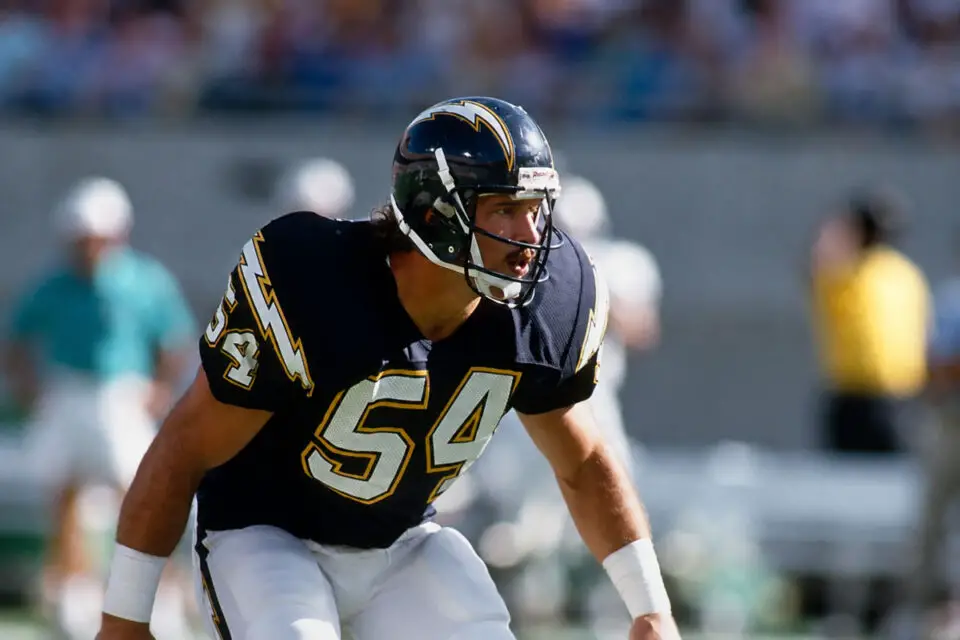
But more than 36 years later, one memory from that season remains vivid: a late-season trip to Jack Murphy Stadium to face the San Diego Chargers and the player Washington had been watching since he was a kid in Texas — Billy Ray Smith.
“He was Billy Ray Smith, and I was just a rookie coming from Dallas,” Washington told The Coast News. Washington went on to play 11 seasons in the NFL and won a Super Bowl with the Denver Broncos in 1998. “During the defensive plays, I wasn’t playing that much, so I was watching Billy Ray Smith. And Billy Ray looked like he was cut from a mold. If you wanted to create the prototype of a linebacker, it was Billy Ray Smith. He was in shape. He was built like a Greek god. He had a thick neck.”
Long before Washington suited up across from Smith in the NFL, he was a 12-year-old watching Smith become a Texas football legend.
Four years younger than Smith, Washington moved from Denver to Dallas in 1977, arriving just in time to watch Smith lead Plano to the Class 4A state championship. The title game against Port Neches-Groves drew 49,953 fans at Texas Stadium, a Texas high school football attendance record that still stands.
“They dominated everybody,” Washington recalled. “I didn’t know who he was before the season, but during the football season and after the football season; he was the first Texas high school football hero that I knew. It was a different time, a different era, and Texas football was really huge back then.”
For Washington, Smith’s rise at Plano also carried a familiar Dallas connection. Washington attended Kimball High School in Oak Cliff, and many members of that dominant Plano team had roots in the same neighborhood before their families moved north.
“A lot of those names that were on that Plano team, they came from Oak Cliff,” Washington said. “There were a lot of ties to Plano and Oak Cliff because a lot of the parents moved north. That Plano team, most of their grandparents and parents grew up in Oak Cliff.”
Washington faced Smith three times during his NFL career. Each time, he saw the same qualities that had made Smith a Texas football icon years earlier.
“He was smart. He was tough. He was physical. He was consistent,” Washington said. “When you think of Billy Ray Smith, you think, ‘Wow, he’s a prototype.’ I know he doesn’t get talked about with Dick Butkus and Ray Lewis and those types of guys, but he might be a class below, a step below.”
For more on the life of Billy Ray Smith Jr., read The Coast News columnist Jay Paris’ heartfelt tribute to the former Chargers great here.