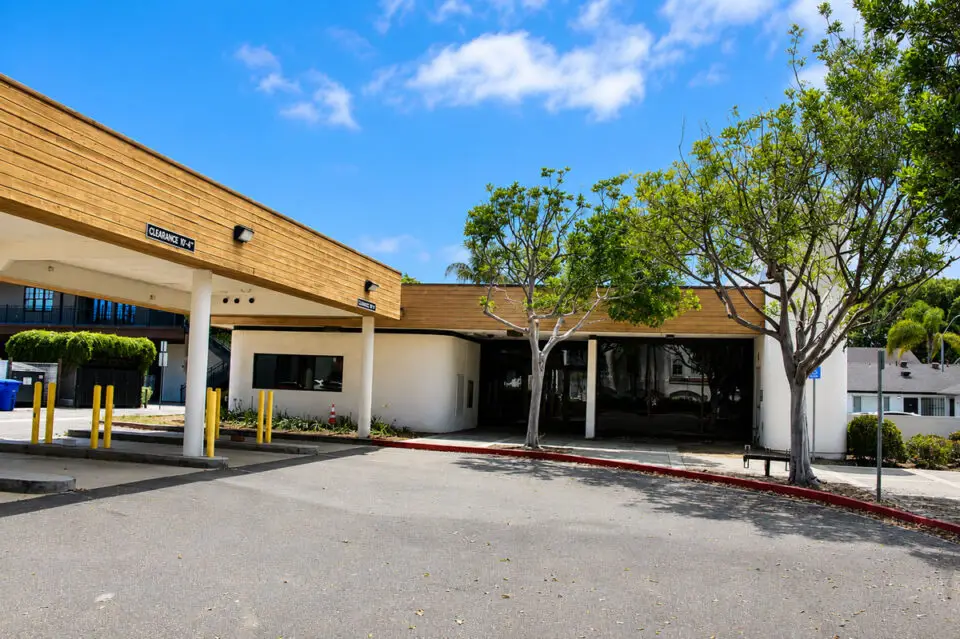
CARLSBAD — After sharply criticizing the state housing laws that left them little choice, the Carlsbad City Council approved a five-story mixed-use condominium project along Carlsbad Village Drive despite repeated objections to its size and density.
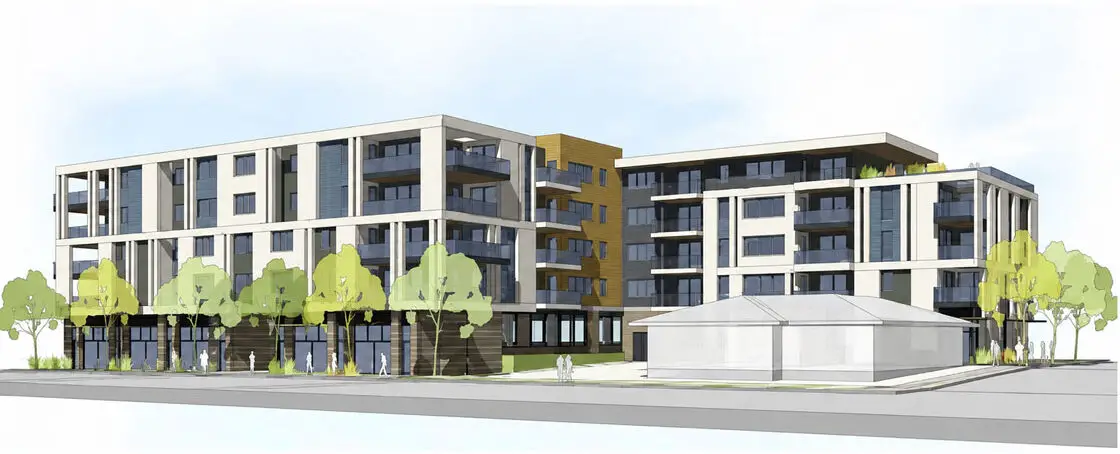
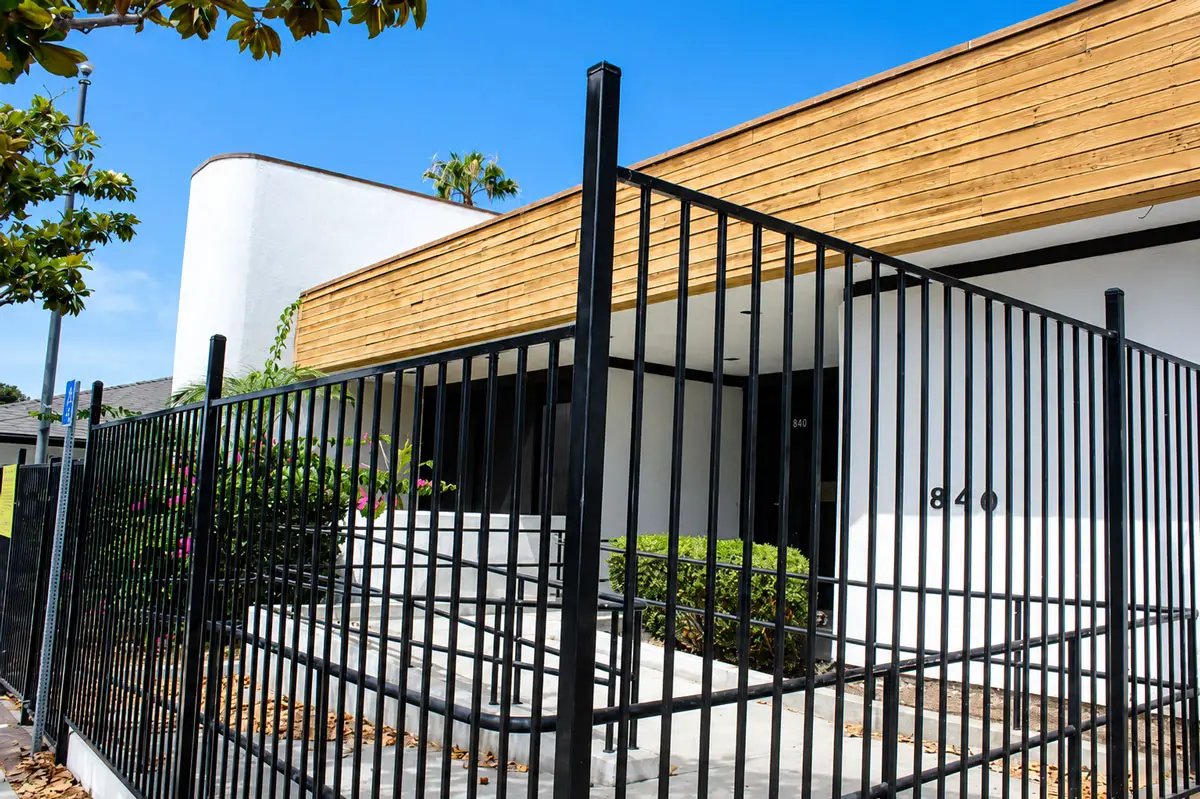
The council voted 4-1 on July 28 to approve the project at 840 Carlsbad Village Drive, which will replace a vacant former bank on a 0.72-acre site with 50 for-sale condominiums and 3,801 square feet of ground-floor commercial space.
The project nearly doubles the 26 units otherwise allowed under the Village & Barrio Master Plan through California’s Density Bonus Law.
The development includes one-, two- and three-bedroom condominiums, including four deed-restricted units for very low-income households and four for moderate-income households. Under state housing laws, the project also qualified for six waivers from city development standards, including maximum building height and parking requirements. The affordable units will remain deed restricted for 55 years.
Mayor Keith Blackburn said the scale of the project was roughly double what the city’s planning documents envisioned.
“We have a growth management plan, and it just makes so much sense — and the residents voted on it,” Blackburn said. “It says we’re not going to build more and faster than what we can handle. And it’s so frustrating to have state lawmakers in Sacramento say, ‘Too bad, we don’t care. You’re going to do this.’
“I think it’s disgusting, I think it’s cowardice of the state to do that and then to tell us we have to vote on it and we have to vote yes and if we don’t vote yes, there’s consequences.”
Blackburn said his frustration was directed at state laws — not the developer — for removing local control over projects like this.
“We want to make the decisions we think are in the best interest of the city,” Blackburn said. “It kills me to have to say yes to these projects, but the state has mandated that we say yes to them.”
Eric Lardy, Assistant Director of Community Development, said recent state laws, including the Housing Crisis Act, Housing Accountability Act and Density Bonus Law, were enacted to accelerate housing construction by limiting local governments’ ability to deny qualifying residential projects.
“New state housing laws have been passed that fundamentally change how new housing gets approved,” Lardy said. “The state’s goal in passing these laws was to accelerate the development of new housing. So even though cities have traditionally had control over how land is used — and here in Carlsbad that included establishing a cap on how many homes would be built. Today we find ourselves in a much different position.”
Lardy said the Housing Accountability Act’s “stated purpose of the law is to significantly increase new housing by curbing the local governments’ ability to effectively deny housing projects,” noting that “issues like community character and bulk and scale are often considered subjective” and therefore generally cannot be used to reject projects.
He said the city could only deny the project if it found a specific, unmitigable public health or safety impact, a standard staff concluded the proposal did not meet. City staff also noted that California courts have consistently upheld these state housing provisions, further limiting local discretion.
Developer outlines project
All 50 condominiums will be offered for sale, including four reserved for very low-income households and four for moderate-income households, qualifying the project for a density bonus under state law.
Jonathan Frankel, representing developer Rincon Homes, said the city has permitted only 14 deed-restricted moderate-income housing units in the past five years, all of them rentals.
“As far as we can tell, it is the very first project in the city to offer for-sale deed restricted homes for moderate income families,” Frankel said. “We frequently refer to this income category — these folks — as the missing middle.”
He said the “missing middle” consists of households earning too much to qualify for significant housing subsidies but too little to afford market-rate homes.
Frankel estimated the moderate-income units would sell for $375,000 to $425,000, while the very low-income units would sell for about $150,000.
He added that the project will prohibit short-term rentals.
The plans include 50 parking spaces in a ground-level garage, though Frankel said the design could accommodate up to 23 additional spaces using mechanical parking lifts, depending on residents’ needs and vehicle types.
He said the development team had “evaluated all options to increase parking on-site” and would work with the city to identify additional solutions to address parking concerns.
At Blackburn’s request, the council recessed twice while staff drafted language requiring the developer to offer to install the mechanical lifts if accepted by the city. The condition, agreed to by the developer, was added to the project’s approval.
Residents raise concerns
During public comment, residents and nearby property owners raised concerns about parking, traffic and the building’s color scheme, saying it could clash with the Village’s character.
Steve Linke, a former member of the Carlsbad Traffic Safety and Mobility Commission, said the added density could create safety concerns during an emergency evacuation.
Many of those concerns echoed issues raised by the Planning Commission when it recommended approval of the project in May. The commission voted to recommend approval after receiving written public comments but no public testimony.
Despite criticizing the state laws that compelled the vote, the council approved the project 4-1. Councilmember Melanie Burkholder, whose district includes the site, cast the lone dissenting vote.
“I was not elected to represent Sacramento, I was elected to represent the Village and the Barrio and this is not a project folks want,” Burkholder said.
Burkholder said she was concerned the cost of the mechanical lifts would ultimately fall on buyers and that the developer’s promise to continue working with the city on parking was unenforceable. She also echoed public concerns about the building’s color palette but said the vacant former bank site was ready for redevelopment and would benefit from the addition of for-sale affordable housing.
Mayor Pro Tem Priya Bhat-Patel said state law leaves cities with a “really narrow legal standard” for denying projects.
“Tonight’s vote isn’t really a referendum on whether we like the project’s size,” Bhat-Patel said.
Councilmember Kevin Shin said the state’s housing strategy failed to account for Carlsbad’s unique geography, noting that the transit corridor the state seeks to encourage depends on a rail line along an eroding coastline.
He said adding more density to a heavily visited coastal area would only compound future challenges but that the city was “hamstrung with this because of state laws.”
Councilmember Teresa Acosta said her involvement with the League of California Cities stems from a belief that local governments should retain authority to negotiate with developers.
“Overall, in the big picture, we do have a housing affordability crisis in the state,” Acosta said. “And state lawmakers are attempting to solve this issue by imposing blanket laws across the entire state and basically saying that we cannot refuse projects — and in fact giving additional assistance to developers to add more units and go higher.”
Correction: An earlier version of this story incorrectly stated Eric Lardy’s title.